


Religious Organization Insurance: What Churches, Synagogues, Mosques, and Faith Communities Need
Religious organizations are 501(c)(3) nonprofits with a specific set of insurance needs that differ meaningfully from secular nonprofits. The combination of owned real property (often historic and difficult to replace), large volunteer workforces, youth programming, school operations, residential facilities, and the unique governance structure of religious leadership creates an insurance profile that generic commercial policies routinely fail to address.
Key Takeaways
- Church property requires specialized valuation — historic buildings, stained glass, organs, and religious artifacts are not adequately covered by standard commercial property forms.
- Sexual misconduct liability is the largest litigation risk for religious organizations and requires dedicated coverage separate from standard GL.
- School and daycare operations create entirely separate insurance obligations — if your organization runs a school or childcare program, those operations need their own coverage analysis.
- Employment practices claims against religious organizations involve complex ministerial exception doctrines that require specialized legal counsel — EPLI coverage for religious organizations must account for this.
Related reading: how much does title insurance cost, nonprofit directors officers insurance, and does zenni take insurance.
Property Insurance for Religious Organizations
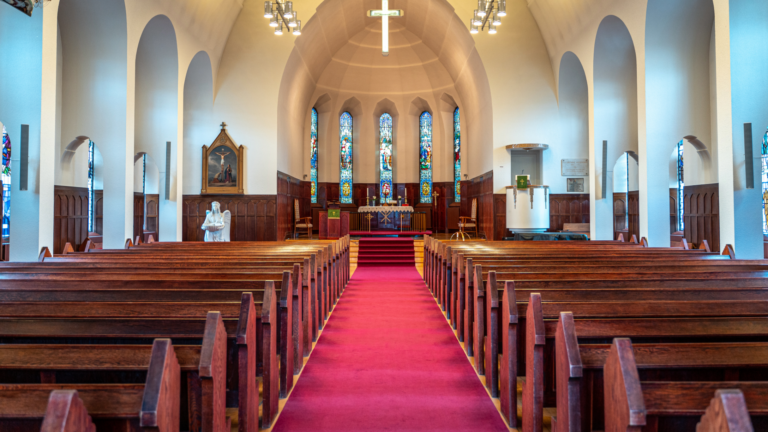
Standard commercial property forms weren’t designed for sanctuaries. The replacement cost of a 100-year-old stone church — including historic masonry, stained glass windows, pipe organs, and irreplaceable architectural details — bears no relationship to its assessed value or its general commercial construction cost. Religious organizations that insure at assessed value or at generic square-footage rates are systematically underinsured. A proper property program for a historic religious building requires a qualified appraisal and a policy form that covers full replacement cost including architectural detail restoration.
Sexual Misconduct Liability
Sexual misconduct claims against religious organizations are among the largest and most consequential in the nonprofit sector. Standard GL policies exclude sexual misconduct claims. Dedicated sexual misconduct liability coverage — sometimes packaged with abuse and molestation coverage — is available and necessary for any religious organization with youth programming, residential ministries, or pastoral counseling activities. Pricing depends heavily on the organization’s child protection policies, background check practices, two-adult rules enforcement, and claims history.
Religious Schools and Childcare Programs
Religious organizations that operate schools, daycare centers, after-school programs, or summer camps have commercial insurance needs that go well beyond the congregation’s basic coverage. Student accident coverage, school board liability (similar to D&O for school governance), abuse and molestation liability specific to childcare, and the contractual insurance requirements of state licensing agencies all need to be addressed. Many religious organizations make the mistake of assuming their general church policy covers their school — it typically does not.
For a broader look at how these coverage considerations fit into a complete risk program, our guide on complete nonprofit insurance guide covers the full picture for organizations at this scale.
Employment Practices Liability for Religious Organizations
Religious organizations navigate complex legal terrain in employment matters. The ministerial exception doctrine exempts qualifying religious employers from certain federal anti-discrimination laws for employees in ministerial roles. But that exception has limits, and its application in specific situations is frequently litigated. EPLI for religious organizations must be placed with carriers and counsel who understand the intersection of employment law and religious liberty claims — not all EPLI insurers have this expertise.
Related: builders risk insurance
Frequently Asked Questions
Related Resources: how much does title insurance cost • does zenni take insurance
Is a standard business owners policy adequate for a church?+
No. Standard BOP forms have property sublimits that are inadequate for historic religious buildings, don’t account for the specific liability exposures of religious programming, and typically exclude sexual misconduct entirely. Purpose-built religious organization policies from carriers with dedicated church programs — including Chubb, Church Mutual, and Philadelphia Insurance — provide substantially better coverage for comparable or lower premiums than generic commercial products.
Does a small congregation need Directors and Officers insurance?+
Yes — any religious organization with a governing board or church council needs D&O protection for its leaders. Financial management decisions, employment disputes, and governance conflicts all generate D&O-type claims for religious organizations. Religious board members are frequently unaware of their personal liability exposure — assuming that their service to a faith community provides some form of legal protection. It does not. D&O insurance for small congregations starts at approximately $1,000–$2,000 per year.
See also: our guide on D&O coverage nonprofits.
Religious Organization Insurance
We place comprehensive insurance programs for churches, synagogues, mosques, and faith communities — including property programs designed for historic buildings and liability coverage that addresses the specific exposures of religious programming.
Get a Religious Organization Quote