


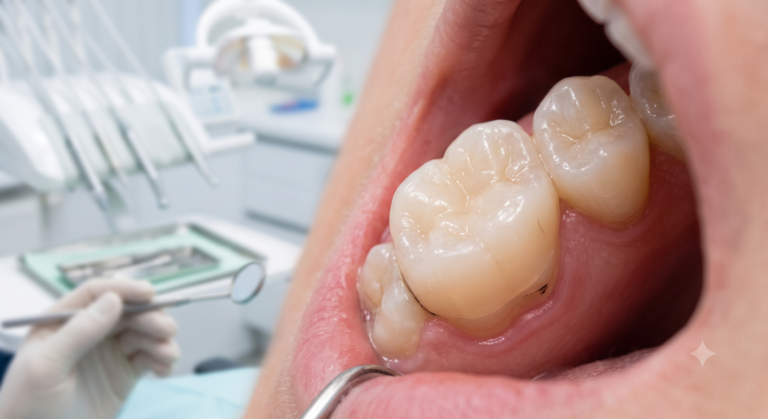
A dental filling costs $100 to $600 without insurance in 2026, depending on the material, the size of the cavity, and which tooth needs repair. Composite resin fillings — the tooth-colored kind most patients and dentists prefer — run $150 to $300 for a single surface on a front or side tooth. Back molars cost more because they bear heavier chewing pressure and require more material. Silver amalgam fillings are cheaper at $50 to $200 per tooth, but fewer dentists offer them and many patients prefer the look of composite.
The CDC estimates that roughly one in five adults between 20 and 64 has at least one untreated cavity. Cost is the main reason people delay treatment, which is unfortunate because a $200 filling today can prevent a $1,500 root canal and crown next year. The math strongly favors treating decay early. This guide breaks down what you will actually pay by filling type, what drives the price up or down, and where to go to keep costs as low as possible.
Key Takeaways
- Composite (white) fillings: $150-$300 per surface — most common choice in 2026
- Amalgam (silver) fillings: $50-$200 per tooth — cheapest option but declining in availability
- Ceramic or porcelain inlays: $500-$1,800 — lab-made, most durable, highest cost
- Gold inlays: $600-$2,000+ — longest-lasting but rarely chosen today
- Number of surfaces is the biggest cost multiplier — a one-surface filling costs half what a three-surface filling costs
- Dental schools charge 30-50% less than private practice for identical procedures
What Fillings Cost by Material Type
The material your dentist uses is the single biggest factor in what you pay. Each material has trade-offs between cost, durability, and appearance. Here is what each option runs without insurance in 2026.
| Filling Material | Cost Per Tooth (1 surface) | Durability | Best For |
|---|---|---|---|
| Composite Resin (white) | $150-$300 | 5-10 years | Front and side teeth, small to medium cavities |
| Silver Amalgam | $50-$200 | 10-15 years | Back molars, large cavities, budget priority |
| Glass Ionomer | $100-$250 | 3-5 years | Below-gumline cavities, temporary fillings, children |
| Ceramic / Porcelain Inlay | $500-$1,800 | 15-20+ years | Large cavities, high-visibility teeth, longevity priority |
| Gold Inlay / Onlay | $600-$2,000+ | 20-30+ years | Heavy-use molars, patients prioritizing maximum lifespan |
A quick note on “surfaces.” Dentists describe cavities by how many surfaces of the tooth are involved. A one-surface filling on the top of a molar is the simplest and cheapest. A three-surface filling that wraps around two sides and the top of the tooth requires more material, more time, and more skill — and costs roughly double. When your dentist gives you a quote, ask which surfaces are involved. That one detail explains most of the variation between a $150 estimate and a $400 estimate for the same material.
Why the Same Filling Costs $150 at One Office and $400 at Another
Dental pricing is not standardized. Two dentists in the same city can charge substantially different amounts for identical procedures. Four factors explain most of the variation.
Geography matters more than anything else in dental pricing. A single-surface composite filling averages around $180 in the Midwest and $300 to $400 in New York City, San Francisco, or Los Angeles. Office rent, staff wages, and supply costs all scale with the local cost of living, and those overhead costs get passed through to patients. If you live near a state or metro border, it can be worth calling offices in a neighboring area where costs are lower.
Dentist experience and specialization affect pricing. A general dentist with five years of experience typically charges less than a cosmetic dentist with 20 years of training in aesthetic restorations. For a straightforward cavity, the clinical outcome is the same — you are paying for the brand name, not a better filling. Save your money on simple fillings and reserve specialist care for complex cosmetic work where the skill difference actually shows.
Practice model matters too. Corporate dental chains like Aspen Dental, Affordable Dentures, or Pacific Dental Services often advertise lower starting prices to attract patients, though additional fees (exams, X-rays, follow-up visits) can bring the total closer to independent practice pricing. Cash-only practices that skip insurance billing altogether frequently offer the lowest all-in pricing because they avoid the administrative overhead of claims processing.
Urgency drives cost up. An emergency same-day filling after a weekend toothache costs more than a filling scheduled during a routine exam. If your cavity is not causing pain, schedule the filling during regular hours to avoid emergency surcharges of $50 to $150.
Best Places to Get an Affordable Filling Without Insurance
Dental Schools
University dental school clinics consistently offer the lowest prices for fillings and other restorative work — typically 30 to 50 percent below private practice rates. The work is performed by dental students in their third and fourth years of clinical training, directly supervised by faculty dentists. Treatment takes longer because of the teaching component, but the clinical quality is excellent. The ADA’s dental school directory lists accredited programs by state. Major programs include NYU, UCLA, University of Michigan, and the University of Texas Health Science Center.
Federally Qualified Health Centers (FQHCs)
Community health centers receiving federal funding provide dental care on a sliding-fee scale tied to household income. A filling at an FQHC might cost $25 to $75 for patients at or below 200 percent of the federal poverty level. Search the HRSA Health Center Finder by ZIP code to locate FQHCs with dental services near you. Not all locations offer dental care, so call ahead to confirm availability and wait times.
Dental Discount Plans
Dental savings plans from companies like DentalPlans.com, Careington, and Cigna Dental Savings cost $80 to $200 per year for a membership that provides 15 to 50 percent discounts at participating dentists. Unlike insurance, there are no deductibles, no annual maximums, and no waiting periods. For a patient needing two or three fillings in a year, the membership pays for itself with a single procedure. Verify that the dentist you want to use is in the plan’s network before purchasing.
Negotiate a Cash-Pay Price
Many private dental offices offer a cash-pay or time-of-service discount of 10 to 20 percent for patients who pay in full at the appointment. This avoids the insurance billing process, which saves the office staff time and reduces their collection risk. Simply ask the front desk before scheduling: “Do you offer a discount for patients paying out of pocket at the time of service?” The worst they can say is no, and most offices will say yes.
Use HSA or FSA Funds
Dental fillings are eligible expenses under both Health Savings Accounts and Flexible Spending Accounts. Paying with pre-tax dollars from these accounts reduces the effective cost by your marginal tax rate. A $250 filling paid with HSA funds costs a 24-percent-bracket taxpayer just $190 in real after-tax dollars.
What Dental Insurance Actually Covers for Fillings
Most dental insurance plans classify fillings as a “basic” service and cover them at 70 to 80 percent of the plan’s allowed amount after you meet your annual deductible. That means a $250 filling covered at 80 percent costs you $50 out of pocket — as long as you are using an in-network dentist and have not exceeded your plan’s annual maximum (typically $1,000 to $2,000).
One common gotcha: many plans apply a “least expensive alternative treatment” clause. If a composite filling costs $250 but an amalgam filling for the same tooth costs $150, the plan pays 80 percent of $150 ($120) and you pay the $130 difference. This affects back teeth where amalgam is considered a clinically acceptable alternative. Ask your insurer whether LEAT applies to your plan before assuming your composite filling will be covered at the composite price.
For a broader look at how dental costs add up without coverage, see our guides on dental cleaning costs without insurance, dental crown costs without insurance, and how much braces and Invisalign cost without insurance.
When a Filling Becomes a Crown (and Why That Costs Five Times More)
Timing matters. A small cavity caught during a routine exam is a $200 filling. The same cavity left untreated for a year or two can grow deep enough to reach the tooth’s nerve, requiring a root canal ($800 to $1,500) and a crown ($1,000 to $3,000) to save the tooth. That turns a $200 problem into a $2,000 to $4,500 problem — not counting the additional appointments, time off work, and discomfort involved.
If your dentist says you have a cavity and recommends a filling, getting it done sooner rather than later is the single best financial decision you can make about your dental health. Early decay is small, easy to repair, and cheap. Advanced decay is none of those things.
Frequently Asked Questions
How much does a cavity filling cost without insurance?+
A cavity filling costs $100 to $600 without insurance depending on the material and number of surfaces. Composite (white) fillings — the most common type — run $150 to $300 for a single-surface filling. Silver amalgam is cheaper at $50 to $200. Ceramic and gold inlays for larger cavities range from $500 to $2,000. Most patients needing a standard composite filling on a front or side tooth pay $175 to $250.
Are white fillings more expensive than silver?+
Yes. Composite (white) fillings cost 20 to 50 percent more than silver amalgam fillings because the material is more expensive and the bonding technique takes longer. A single-surface composite filling averages $150 to $300, compared to $50 to $200 for amalgam. However, composite fillings bond directly to the tooth structure, which can preserve more of the natural tooth. Many dentists no longer offer amalgam at all, making composite the default choice.
How can I get a cheaper dental filling?+
Dental schools offer fillings at 30 to 50 percent below private practice rates. Community health centers (FQHCs) charge on a sliding fee scale as low as $25 to $75 based on income. Dental discount plans ($80 to $200 per year) provide 15 to 50 percent off at participating dentists. Paying cash at the appointment often earns a 10 to 20 percent discount. And using HSA or FSA pre-tax funds effectively reduces the cost by your tax rate.
How long do dental fillings last?+
Composite resin fillings last 5 to 10 years on average, though they can last longer on non-chewing surfaces. Silver amalgam fillings last 10 to 15 years. Ceramic inlays and gold restorations can last 15 to 30 years. Lifespan depends on the size of the filling, the tooth’s location, your bite force, and oral hygiene. Smaller fillings on non-stress-bearing surfaces last the longest. Large fillings on molars wear out fastest and may eventually need to be replaced with a crown.
Does dental insurance cover fillings?+
Most dental insurance plans cover fillings as a basic service at 70 to 80 percent of the allowed amount after your deductible. For a $250 composite filling, you would pay roughly $50 to $75 out of pocket with a typical plan. However, many plans use a “least expensive alternative treatment” clause that limits coverage to the cost of an amalgam filling for back teeth, even if you choose composite. Your annual maximum ($1,000 to $2,000 on most plans) also limits how much the plan pays in a given year across all dental services.
Disclaimer: This article is for informational purposes only and does not constitute dental or insurance advice. Filling costs vary by provider, location, material, and cavity size. Consult directly with a licensed dentist for a personalized treatment plan and written cost estimate.