


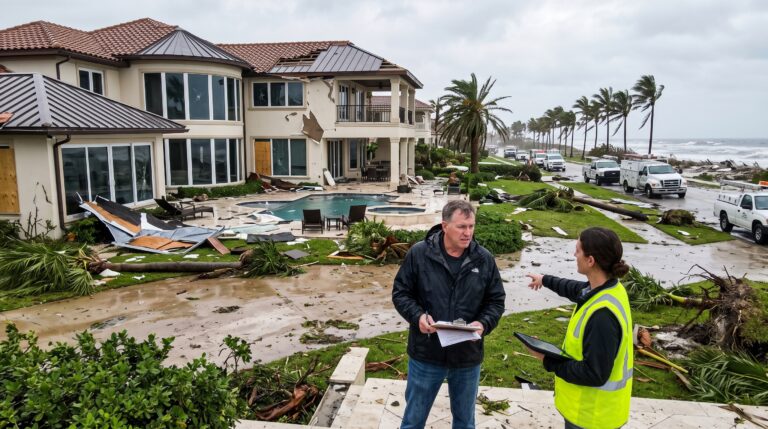
On a high-value home, a hurricane deductible is usually 1% to 5% of the dwelling limit, not a flat dollar amount. On a $10 million home that means $100,000 to $500,000 out of pocket before the policy pays. Add the fact that standard policies exclude flood, and the National Flood Insurance Program caps dwelling coverage at $250,000, and many coastal owners are carrying far more risk than they realize.
Key Takeaways
- The math: A 2% deductible on a $10M dwelling is $200,000; at 5% it is $500,000.
- Flood gap: Standard homeowners policies exclude flood, and NFIP dwelling limits stop at $250,000.
- Collections: Art, wine, jewelry, and cars carry sublimits far below their value without scheduled coverage.
- Timing: Carriers stop accepting changes once a storm threatens, so review before the season.
- Market: New carriers entering HNW property in 2026 are creating options for well-protected homes.
Private Client Coverage Review
We review your homes, collections, and watercraft against current values and policy terms, then show you exactly what a storm would cost you.
Request a Private Client ReviewServing high-net-worth families with complex property and collections.
How Does a Hurricane Deductible Work on a High-Value Home?
Most coastal policies use a percentage deductible for hurricane or named storm losses. The percentage applies to the dwelling limit, not to the size of the claim.
- A 2% deductible on a $5M dwelling limit is $100,000, whether the damage is $150,000 or $2M.
- The hurricane deductible usually replaces the regular all-other-perils deductible for storm losses.
- It is often triggered by a named storm or hurricane watch or warning issued by the National Weather Service.
- Some policies apply the deductible once per season; others apply it per storm.
- Separate structures, such as guest houses, may carry their own deductible.
How state rules shape hurricane deductibles
Florida and Texas both regulate how hurricane deductibles work, which changes the options available.
- Florida law sets out hurricane deductible options and season rules in Section 627.701, Florida Statutes.
- In Florida, the hurricane deductible generally applies once per calendar year for qualifying policies.
- Texas coastal owners may rely on windstorm coverage regulated through the Texas Department of Insurance.
- High-value homes often sit with surplus lines or private carriers whose wording differs from admitted policies.
- We read the trigger and season language on every policy, because it decides who pays.
What Percentage Hurricane Deductibles Cost Out of Pocket
| Dwelling Limit | 1% Deductible | 2% Deductible | 5% Deductible |
|---|---|---|---|
| $2,000,000 | $20,000 | $40,000 | $100,000 |
| $5,000,000 | $50,000 | $100,000 | $250,000 |
| $10,000,000 | $100,000 | $200,000 | $500,000 |
| $20,000,000 | $200,000 | $400,000 | $1,000,000 |
Simple percentage math on the dwelling limit. Actual deductibles and triggers depend on policy wording and state rules.
Why Is Flood the Biggest Gap for Coastal Homeowners?
Wind and flood are separate perils, and standard homeowners policies exclude flood. In a hurricane, storm surge is flood, so a fully insured home can still face an uninsured loss.
- NFIP dwelling coverage caps at $250,000, with separate, lower limits for contents.
- Excess flood or private flood policies can add limits above NFIP or replace it entirely.
- Basements, finished lower levels, and outdoor features may have restricted flood coverage.
- Waiting periods on new flood policies mean you cannot buy coverage when a storm is already coming.
- Homes outside mapped flood zones still flood; inland flooding is a major source of storm losses.
How much flood coverage does a high-value home need?
Enough to rebuild the structure and replace contents after a surge or rain-driven flood. For most coastal estates, that means private or excess flood on top of NFIP.
- Start with replacement cost of the dwelling, not market value or purchase price.
- Add contents values, especially for ground-floor rooms and garages.
- Consider additional living expense coverage for long rebuild periods.
- Elevation certificates can lower private flood pricing significantly.
- Review flood and wind limits together so there is no gap in a combined event.
Wind vs. flood: who pays for what
In a hurricane, adjusters split damage between wind and water. That split decides which policy pays, and which deductible applies.
- Roof and window damage from wind usually falls under the homeowners policy and its hurricane deductible.
- Storm surge and rising water fall under flood coverage, if you have it.
- Disputes arise when both caused damage to the same room or structure.
- Photos and inventories taken before the storm strengthen your claim.
- Having wind and flood with coordinated carriers can reduce disputes.
Are Your Collections Covered in a Hurricane?
Probably not at full value unless they are scheduled. Standard homeowners policies cap fine art, jewelry, wine, and similar items with low sublimits.
- Fine art and collectibles often need separate collections coverage with agreed values.
- Wine collections can lose value from power loss and temperature change, not just physical damage.
- Classic and luxury cars need agreed value coverage to avoid depreciation disputes.
- Yachts and boats need hull coverage with named storm plans and haul-out requirements.
- Read our guide on insuring collections and valuable possessions.
Why valuation language matters at claim time
How a claim is valued can matter as much as whether it is covered. Agreed value and stated value policies pay very differently.
- Agreed value pays the scheduled amount for a total loss, without depreciation arguments.
- Actual cash value subtracts depreciation, which can cut a payout sharply.
- One of our private clients recovered more than $200,000 on a luxury vehicle valued near $180,000, thanks to agreed value wording.
- Appraisals should be updated every few years for art and jewelry.
- Moving collections before a storm may be covered as a loss-prevention expense under some policies.
Know Your Real Hurricane Exposure
Our advisors model your deductible, flood, and collections gaps across every residence, primary and seasonal.
Schedule a Storm Readiness ReviewServing high-net-worth families with complex property and collections.
How Do Secondary and Seasonal Homes Change Your Hurricane Risk?
Second homes often carry worse terms than the primary residence. Higher deductibles, vacancy rules, and reduced coverage are common in coastal zones.
- Seasonal homes may carry higher percentage deductibles than your primary home.
- Vacancy or unoccupancy clauses can limit coverage when the home sits empty for long periods.
- Hurricane preparation plans, such as shutters and caretakers, affect underwriting.
- Homes in different states may be with different carriers, creating inconsistent terms.
- A single private client program can align deductibles and limits across residences.
Questions to ask about a seasonal home policy
A short list of questions catches most second-home gaps. Ask them at every renewal.
- Is the hurricane deductible higher than on my primary home, and by how much?
- Does vacancy or unoccupancy reduce coverage when the home is empty?
- Who is responsible for storm preparation, and is that documented?
- Is flood coverage in place, and does it include contents?
- Do my limits and deductibles match across every residence?
What Can High-Net-Worth Owners Do Before Hurricane Season?
Act before a storm is named. Most carriers restrict policy changes once a hurricane watch is issued for your area.
- Check the seasonal outlook; Colorado State University publishes its forecasts starting each April.
- Review dwelling values against current rebuilding costs.
- Confirm your hurricane deductible percentage, trigger, and whether it applies per storm or per season.
- Add or increase private or excess flood coverage where needed.
- Track active storms through the National Hurricane Center and document your home’s condition beforehand.
Choosing a deductible level
A higher deductible lowers premium, but only makes sense if you can comfortably absorb the loss. The right level is a liquidity decision, not just a pricing decision.
- Compare the premium saved with the extra out-of-pocket exposure in a storm year.
- Families with strong liquidity often choose higher deductibles and insure catastrophic loss.
- Lenders may cap the deductible you are allowed to carry.
- Some carriers credit mitigation features with lower deductible options.
- Revisit the choice every year as home values and markets change.
Is the High-Net-Worth Property Market Opening Up?
Yes, for well-protected homes. Several new property carriers and managing general agents launched or announced plans in 2026, adding to Lloyd’s and Bermuda capacity.
- More competition means more choice on deductible structure, coverage breadth, and price.
- Homes with impact glass, generators, and modern roofs get the best options.
- A credible alternative quote can improve terms even if you stay with your carrier.
- One private client of ours cut total premium 32% on a program above $100,000 after a market comparison.
- Families in Miami and Houston benefit most, given coastal exposure.
How Does Hurricane Coverage Fit a Broader Private Client Program?
Property is only one part of protecting family wealth. Liability, flood, collections, and auto all need to work together.
- Personal umbrella limits should reflect your net worth; see personal liability insurance explained.
- Homes held in trusts or LLCs need named insured wording that matches ownership.
- Household staff may require workers compensation and employment practices coverage.
- Cyber and identity coverage is increasingly part of private client programs.
- An annual review keeps every policy aligned with values and life changes.
Why a single advisor for all residences helps
When homes, cars, collections, and liability sit with different agents, gaps hide between policies. One coordinated program closes them.
- Umbrella policies require specific underlying limits on every home and vehicle.
- Deductible strategy works best when set across the whole portfolio.
- One renewal date simplifies review and negotiation.
- Claims after a storm move faster with one point of contact.
- A full view makes it easier to spot underinsured values.
Compare the High-Net-Worth Market
New capacity means more options. We compare leading HNW carriers on deductible structure, coverage breadth, and claims service.
Request a Market ComparisonServing high-net-worth families with complex property and collections.
Frequently Asked Questions
How is a hurricane deductible calculated?+
Most hurricane deductibles are a percentage of the dwelling coverage limit, commonly 1% to 5%. A 2% deductible on a $10 million dwelling limit is $200,000.
The percentage applies to the dwelling limit, not to the claim. Policy wording decides what triggers it and whether it applies per storm or per season.
Does homeowners insurance cover hurricane flood damage?+
No. Standard homeowners policies exclude flood, including storm surge. Flood requires a separate NFIP, private, or excess flood policy.
NFIP caps dwelling coverage at $250,000, which is far below most high-value homes. Private or excess flood fills the gap.
Can I change my hurricane deductible during hurricane season?+
Usually only before a storm threatens. Most carriers suspend new policies and coverage changes once a hurricane watch or warning is issued for your area.
Plan deductible and coverage changes at renewal or before June 1, when the Atlantic hurricane season begins.
Are fine art and wine collections covered in a hurricane?+
Only up to low sublimits under a standard homeowners policy. Scheduled collections coverage with agreed values is needed for full protection.
Ask whether the policy covers spoilage from power loss for wine, and loss-prevention costs for moving art before a storm.
Is it worth shopping high-net-worth home insurance in 2026?+
For well-protected homes, often yes. New carriers and MGAs entered the HNW property market in 2026, increasing competition for strong accounts.
A comparison does not require switching. A credible alternative quote often improves your current carrier’s renewal terms.
Disclaimer: This article is for informational purposes only and does not constitute financial, legal, tax, or insurance advice. Coverage, pricing, and claim outcomes depend on specific policy terms, underwriting, and carrier determinations. Client examples are anonymized and results vary. Consult our licensed insurance advisors and your own tax and legal professionals for guidance tailored to your situation.
Work With Licensed Insurance Advisors
Hotaling Insurance Services builds insurance programs for mid-market and enterprise businesses, real estate owners, and high-net-worth families. Our licensed advisors structure coverage for complex operations across multiple states and jurisdictions.
Credentials & Expertise:
- ✓ Nationally licensed in 50 states
- ✓ $368M in managed premium volume
- ✓ 99.7% client retention rate
- ✓ Partnerships with top-tier carriers (Hartford, Travelers, AIG, Chubb, etc.)
- ✓ Specialized expertise in ERISA, ACA, and multi-state compliance
Serving high-net-worth families in Houston, Miami, NYC, and the Hamptons.