


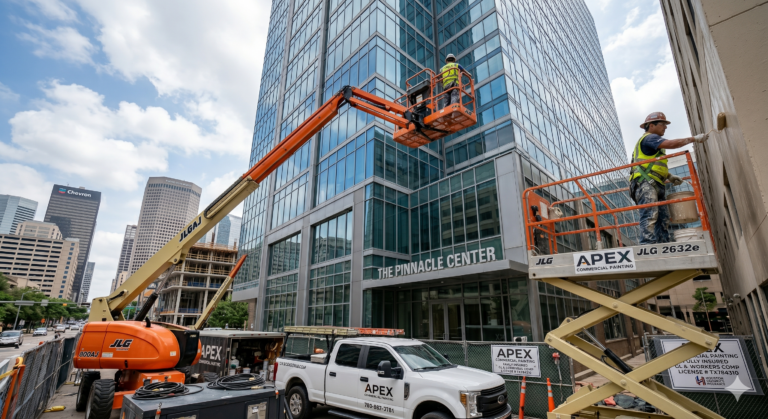
Painting Contractor Workers’ Compensation Insurance: Cost and Class Codes
For a large painting or coatings contractor, workers’ compensation is almost always the biggest line in the program — and the one most exposed to classification and audit error. Crew benefit programs sit alongside it, and our guide to supplemental life insurance covers how those pieces fit together.
Key Takeaways
- Largest program line for any crewed commercial or industrial operation.
- Class code 5474 for painting; 5037 for metal structures over two stories; 9501 for shop-only work.
- Rates vary dramatically by state: roughly $2.54 to $13.20 per $100 of payroll, national average near $5.57.
- EMR is the primary lever: based on three years of claims history; below 1.0 earns credits, above 1.0 surcharges everything.
- Multi-state crews require coverage configured per state of operation.
Workers’ compensation covers crew injuries regardless of fault and protects the business from the employer’s-liability lawsuits that follow serious accidents. For a painting operation. Businesses evaluating this exposure should also review vendor liability coverage for related pricing data.
- Medical expenses for injured crew members, from emergency care through rehabilitation.
- Lost wages while an injured painter recovers and cannot work.
- Employer’s liability, which defends the business if an injured worker sues.
- Premium calculated per $100 of payroll by class code, then adjusted by your EMR.
- Audit exposure when painters are misclassified or subcontractor payroll rolls in.
Manage the Largest Line in Your Program
For $1M+ premium contractors, EMR management and class-code accuracy move real money. Our advisors audit both and build the safety documentation carriers reward.
Request a Comp ReviewSmall single-crew operations are typically served well by State Farm, GEICO, or Progressive.
Painting Workers’ Comp Class Codes: 5474, 5037, and 9501
Correct classification is the foundation of an accurate comp premium, and for a large operation a misclassification compounds across the entire payroll. For additional guidance, explore our resource on PEO coverage. Three codes commonly apply to painting contractors. Operators hauling on TxDOT contracts face distinct requirements, and our guide to dump truck insurance in Houston covers Harris County permitting and MCS-90 mandates. For context on what employees pay out of pocket, see our guides on dental filling costs without insurance and braces and Invisalign costs without insurance.
- Class code 5474 — Painting NOC: interior and exterior painting of residential and commercial structures, including scaffolding setup and incidental finishing. This is the standard painting code.
- Class code 5037 — painting of metal structures over two stories, such as towers, tanks, and bridges. It carries a substantially higher rate than 5474.
- Class code 9501 — shop-only painting, where employees do not leave your premises. It applies only when no job-site work is performed.
- Industrial coatings and specialized structural work may trigger codes beyond 5474 entirely.
- Splitting payroll correctly among codes — rather than rating everything at the highest code — is a direct savings lever.
How Much Does Painting Workers’ Comp Cost?
Comp is priced per $100 of payroll, so it scales directly with crew size — which is why it dominates a large operation’s program. The rate itself varies enormously by state and by your claims history.
Premium benchmarks vary by region — our analysis of homeowners insurance for a $400K home provides state-level rate ranges. Learn more about homeowners insurance protection. For more details, see our guide on whether homeowners covers docks.
Tenants often underestimate what they stand to lose — our guide to the benefits of renters insurance covers what the policy protects. For more details, see our guide on renters insurance car coverage.
Liability extends beyond business operations — our guide to personal liability insurance explains individual coverage options. Learn more about personal umbrella policy options. Our analysis of umbrella policy pricing provides additional cost benchmarks relevant to this coverage.
Specialty trade contractors face similar coverage requirements across disciplines — for details on how licensing and liability intersect for mechanical trades, see our guide to HVAC contractor insurance costs.
Painting contractors working on construction projects need to understand how their coverage fits within the broader insurance requirements — see our guide to construction insurance requirements for contractors for the full landscape.
Painting contractors on construction projects should confirm builders risk coverage protects their installed work — see our breakdown of builders risk insurance pricing for how premiums are calculated.
- The national average rate for class code 5474 runs near $5.57 per $100 of payroll.
- State variation is dramatic: roughly $2.54 per $100 in North Dakota to $13.20 in New York.
- Texas and South Dakota do not mandate coverage for painting contractors; most other states require it once you hire an employee.
- Your EMR then multiplies the base rate up or down based on claims experience.
- For a large multi-state operation, the blended cost reflects every state’s rate where crews work.
Why EMR Controls a Large Painter’s Comp Spend
At scale, the experience modification rate is the number that compounds. It reflects your claims history against expected losses for your class over the prior three years, and a documented safety culture pays back directly in both premium and bid eligibility.
Severity on the liability side moves in the same direction, which is why comp discipline and tower structure get reviewed together — see our analysis of nuclear verdict trends and our breakdown of excess liability insurance costs and limits.
- An EMR below 1.0 earns credits; above 1.0 surcharges every dollar of payroll.
- Many institutional and public owners set a maximum EMR — often 1.0 — as a condition to bid.
- The three-year window means today’s claims affect premiums for years, so claim management matters.
- OSHA-compliant fall-protection programs (29 CFR 1926.501) reduce frequency and severity.
- A modeled return-to-work program limits claim duration and protects the EMR.
The Subcontractor Audit Trap
For a large contractor that subcontracts portions of the work, the workers’ comp audit is where uncontrolled costs surface. Subcontractor payroll without proof of coverage becomes your own.
- Subcontractors without current certificates of insurance roll into your audit as covered payroll.
- That back-premium can reach five or six figures on a large operation at year-end.
- Collecting and tracking sub COIs through the year is the single largest controllable audit cost.
- Written downstream insurance requirements protect both the audit and your liability position.
- We build the COI-tracking discipline into the program so audits hold no surprises.
Disclaimer: This article is for informational purposes only and does not constitute insurance advice. Workers’ compensation rates and requirements vary by state. Consult our licensed advisors for guidance tailored to your operations.
State-by-State Workers’ Comp Requirements for Painting Contractors
Workers’ compensation requirements vary by state, and painting contractors working across state lines need coverage that meets the requirements in every jurisdiction where they have employees working. Texas is the only state where workers’ comp is truly optional for private employers, but even there, general contractors and project owners almost universally require it as a contract condition. Going bare in Texas doesn’t save money when it costs you the bid.
| State | Required? | Employee Threshold | Rate per $100 Payroll (Code 5474) |
|---|---|---|---|
| Texas | Optional (but contractually required) | N/A | $4.50–$7.50 |
| Florida | Yes | 1+ in construction | $5.00–$8.00 |
| New York | Yes | 1+ employees | $7.00–$11.00 |
| California | Yes | 1+ employees | $6.50–$10.00 |
| Georgia | Yes | 3+ employees | $5.50–$8.50 |
The rate per $100 of payroll for painting operations (NCCI class code 5474) is one of the higher construction codes because the work involves ladders, scaffolding, and exposure to chemical solvents. A painting contractor with $1.5 million in annual payroll in New York at a base rate of $9 per $100 faces a manual premium of $135,000 before experience modification. That’s why EMR management isn’t optional for mid-size painting operations — every 0.1 point reduction in your EMR saves $13,500 on that same payroll.
Frequently Asked Questions
What is the workers’ comp class code for painters? +
NCCI class code 5474 covers painting, decorating, and paperhanging on residential and commercial structures, including scaffolding work. Painting metal structures over two stories falls under code 5037 at a higher rate, and shop-only work where employees never leave your premises may fall under 9501.
How much does painting workers’ comp cost? +
Rates for code 5474 average around $5.57 per $100 of payroll nationally but range from roughly $2.54 in North Dakota to $13.20 in New York. Because it is payroll-based, comp is typically the largest single line for a crewed commercial or industrial painter.
How does EMR affect bidding institutional work? +
Many institutional and public owners set a maximum experience modification rate — often 1.0 — to qualify to bid. An elevated EMR both raises your premium and can lock you out of the largest contracts, so managing it is a revenue issue, not just a cost one.
Do I need comp in every state my crews work? +
Yes. Workers’ comp obligations attach where the work is performed, so multi-state painting operations need coverage configured for each state. Only Texas and South Dakota do not mandate it for painting contractors; most states require it once you hire an employee.
How do subcontractors affect my workers’ comp audit? +
Subcontractors who cannot show current certificates of insurance have their payroll rolled into your audit as your own covered payroll, generating back-premium. On a large operation this can reach five or six figures, so tracking sub COIs through the year is essential.
This is part of our complete guide to commercial painting contractor insurance.